
Madrid Prepares for Robotaxis: What Waymo and Uber’s Partners Have Announced
Madrid is becoming a testing ground for autonomous passenger vehicles, with Waymo announcing preparations for a future service and a separate partnership between WeRide, Uber and AVOMO authorised to begin deployment preparations.
The distinction for passengers is important: a vehicle being prepared or tested for autonomous driving is not the same as a driverless taxi service already available to book. The announcements reviewed describe phased development, supervision and launch targets.
Waymo targets its first passengers in 2027
In its 20 October announcement, Waymo said it aims to welcome its first riders in the Region of Madrid in 2027.
The company described an initial phase using electric Jaguar I-PACE vehicles driven manually, followed by technical validation with trained autonomous specialists behind the wheel. The purpose is to adapt its driving system to local traffic patterns and road conditions.
That timetable is a company target, rather than a confirmed public opening date. The announcement does not establish that passengers can already book fully autonomous rides in Madrid.
WeRide, Uber and AVOMO have a separate project
On 10 September, WeRide announced that its partnership with Uber and AVOMO had received a Spanish permit for Level 4 autonomous passenger-vehicle testing.
The permit allows preparation activities including mapping, route validation and operational-readiness testing. The initial phase calls for 20 vehicles supervised by an in-car specialist.
The partners said commercial operations were expected by the end of 2026, subject to deployment preparations and the necessary operational and regulatory milestones. This is a different project and timetable from Waymo’s planned 2027 passenger launch.
What has Spain authorised?
Spain’s traffic authority, the DGT, lists authorisations for 16 Waymo robotaxis and 20 vehicles under AVOMO CARS, associated with WeRide and Uber, in its ES-AV testing register.
Those are national testing authorisations. They do not establish that all 36 vehicles are operating simultaneously in Madrid or carrying paying passengers.
The Madrid regional government’s September announcement also outlined an experimental pilot planned for the final quarter of 2026, initially involving the capital and Alcobendas.
Why this matters
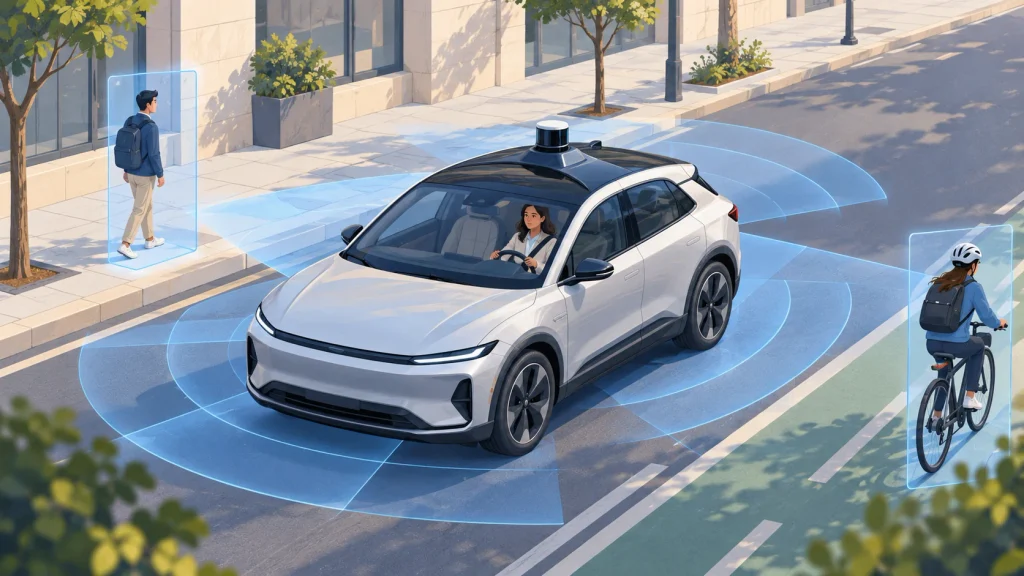
For people interested in robotics, these projects show autonomous systems moving towards a demanding everyday setting: public roads shared with other drivers, cyclists and pedestrians.
The next milestones worth watching are validated testing, confirmed passenger access and the conditions under which vehicles can operate without an onboard safety specialist.
Madrid’s robotaxi story is worth following, but the most useful question is not simply whether autonomous cars are coming. It is what they are authorised to do, how they are supervised and when passengers can actually use them.
Editorial note: This article was prepared with AI assistance and checked against the original sources linked above. It is based on published information, not on an on-site assessment of the vehicles.